
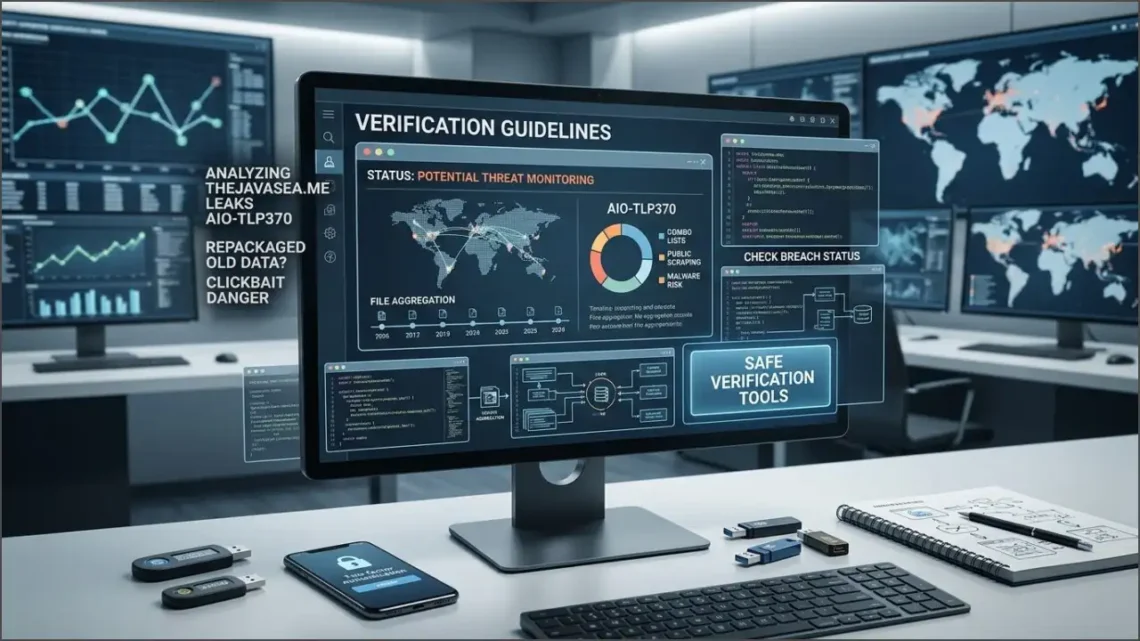
Search trends often bring mysterious terms to light, surfacing across security forums and file-sharing networks overnight. One phrase currently raising questions among web users is Thejavasea.me Leaks AIO-TLP370.
If you stumbled upon this term on a message board, social media thread, or inside a security notification, you likely want to know what it contains, whether your personal information is at risk, and what practical steps you can take to keep your accounts secure.
This guide clarifies the meaning behind the search query, separates genuine cybersecurity threats from deceptive clickbait, and outlines clear steps to protect your personal data.
Understanding Thejavasea.me Leaks AIO-TLP370
To understand what this phrase represents, it helps to break down each term individually:
-
Thejavasea.me: A domain name associated with third-party file hosting, user forums, and unverified data dumps.
-
Leaks: A term indicating that the folder allegedly holds private login credentials, database records, corporate documents, or private media files.
-
AIO (All-In-One): A standard file-naming convention in online forums that signifies a package combining multiple separate data collections into a single download archive.
-
TLP370: A specific batch label or internal tracking code used by the uploader to organize their file uploads.
When put together, the phrase points toward a specific compressed folder package allegedly hosted or shared through the JavaSea network.
Analyzing the Legitimacy of Thejavasea.me Leaks AIO-TLP370
When a term like this begins trending, security analysts examine whether it points to a brand-new database intrusion, stolen system keys, or corporate leaks.
Current cybersecurity monitoring indicates that archives bearing labels like Thejavasea.me Leaks AIO-TLP370 are rarely fresh data breaches. Instead, these files almost always fall into one of three common categories:
1. Repackaged Combo Lists
Most All-In-One archives compile email addresses and passwords stolen from older, well-documented breaches across various platforms over the last decade. Uploader accounts often group old credentials under new, dramatic titles to gain forum reputation or drive paid download links.
2. Clickbait for Malware Distribution
Cybercriminals frequently exploit trending search queries to distribute malicious software. Users searching online for direct download links to the archive often encounter deceptive blogs or forum pages designed to install password-stealing programs, trojans, or malicious software onto the downloader’s device.
3. Aggregated Public Data
Some packages consist of public information gathered from social network profiles, open website directories, or misconfigured servers. While not technically a high-level site hack, aggregated contact details are still frequently used by bad actors for targeted spam or phishing campaigns.
Key Risks of Attempting to Download Leaked Archives
Searching for or attempting to download unverified archives exposes your personal device and data to severe technical hazards:
| Risk Factor | Potential Impact | Mechanics |
| Password Stealers | Complete Account Takeover | Hidden scripts like RedLine or Vidar silently extract stored browser logins, session cookies, and digital wallet keys. |
| Phishing Redirects | Exposure of Sensitive Data | Download buttons redirect users through endless survey traps designed to capture active phone numbers and billing information. |
| Malicious Scripts | Unintended Software Execution | Malicious ad networks hosted on unvetted file hubs run background scripts that execute without explicit user approval. |
Common Misconceptions vs. Reality
Understanding how stolen credentials travel across the web helps put alarming file labels into proper context:
-
Misconception: A new archive title means my accounts were compromised today.
-
Reality: Information stored within All-In-One packages is frequently years old. The true threat occurs if you continue reusing those older passwords on active accounts today.
-
Misconception: Opening a compressed archive file is safe as long as you do not launch an executable program inside.
-
Reality: Modern archives can exploit system vulnerabilities, conceal malicious shortcut files, or contain document macros designed to run background commands upon extraction.
-
Misconception: Standard antivirus programs instantly block every file contained inside a leaked folder.
-
Reality: Emerging stealer programs hidden inside password-protected folders frequently bypass basic security software until signature databases update.
Action Plan: Securing Your Digital Footprint
If you suspect your credentials may be included in an aggregated dump, follow these steps to secure your accounts safely without downloading unknown files.
                  [ Threat Alert Discovered ]
                               │
                               ▼
            [ Check Exposure Status Safely ]
           (Use Verified Breach Monitoring Services)
                               │
            ┌──────────────────┴──────────────────┐
            ▼                                     ▼
   [ Email or Password Exposed ]        [ No Exposure Found ]
            │                                     │
            ▼                                     ▼
   • Identify Shared Credentials         • Keep Current Security Measures
   • Update Password Credentials         • Confirm Multi-Factor Status
   • Activate Authenticator Apps
            │
            ▼
   [ Status: Accounts Fully Secured ]
Step 1: Check Exposure Using Legitimate Tools
Never type your password or private email into unverified search bars or forum request threads. Instead, rely on established security tools:
-
Credential Checking Portals: Enter your email address into reputable breach notification platforms to review historical breach involvement.
-
Built-in Browser Security: Modern web browsers continuously scan saved credentials against known databases and issue direct prompts when passwords match compromised records.
Step 2: Update Compromised Logins
If a monitoring service flags your credentials, focus immediately on updating your account security:
-
Identify every online account that shares the compromised password.
-
Update those logins immediately, using a secure password manager to generate distinct, complex character strings for every service.
-
Prioritize your primary email addresses, banking portals, and critical work tools first.
Step 3: Turn On Multi-Factor Authentication
Leaked passwords lose much of their power when strong multi-factor authentication is active:
-
Avoid text-message-based validation whenever possible, as mobile numbers can be vulnerable to SIM swap attempts.
-
Use standalone authenticator apps or physical hardware security keys for essential accounts.
Step 4: Clean and Audit Your Device
If you previously tried to locate or download files related to this leak, perform a complete device check:
-
Disconnect your computer or phone from local networks temporarily.
-
Run a full antivirus scan using updated, established security software.
-
Review your web browser extensions and remove any add-ons you do not recognize.
-
Clear saved browser cookies to invalidate any active login sessions that malware could attempt to steal.
Guidelines for Website Owners and Platform Managers
If you manage a digital platform and worry user data could be affected by broad credential dumps:
-
Monitor Server Logs: Review access records for sudden spikes in automated traffic or rapid login attempts that indicate credential-stuffing attacks.
-
Require Password Updates: If credential lists involving your domain leak online, invalidate active user sessions and require users to create new passwords upon their next login attempt.
-
Implement Strong Password Hashing: Store user passwords using modern salted hashing functions like Argon2 or bcrypt rather than outdated legacy algorithms.
Summary Checklist
-
Avoid searching for direct download links to Thejavasea.me Leaks AIO-TLP370 to keep your system safe from malicious software.
-
Check your credential safety status through legitimate account monitoring services.
-
Replace reused passwords with complex, distinct strings generated by a password vault.
-
Enable multi-factor authentication across all sensitive personal and corporate accounts.



One comment on “Thejavasea.me Leaks AIO-TLP370: Verification, Risks & Safety Guide”